

SpaceX's Internet Atmosphere
Essay: The era of “no service” ending opens up a world of possibilities.

As much as 70% of the Earth’s land isn’t covered by existing cell service providers. Meanwhile, there are more than 3 billion people on Earth who have never used mobile internet.
While service access is just one of many limiting factors, it’s an economic reality that building cell towers in the Amazon, across the Sahara, or through the mountains of Nepal hasn’t been a viable option.
Infrastructure follows profit, and profit follows density. So the sparsest places starved for connectivity get the infrastructure last, if ever. And even in wealthy countries like the U.S., the experience of zero bars is familiar to almost everyone.
You drive an hour outside any major city, you go for a hike, you take a road trip through the mountains, and your phone becomes a brick. Billions of dollars in connective technology focused on the device in your pocket, and it goes silent the moment you leave the grid.
But SpaceX just announced a plan to change that entirely. At scale, you’ll never experience a dead zone again.
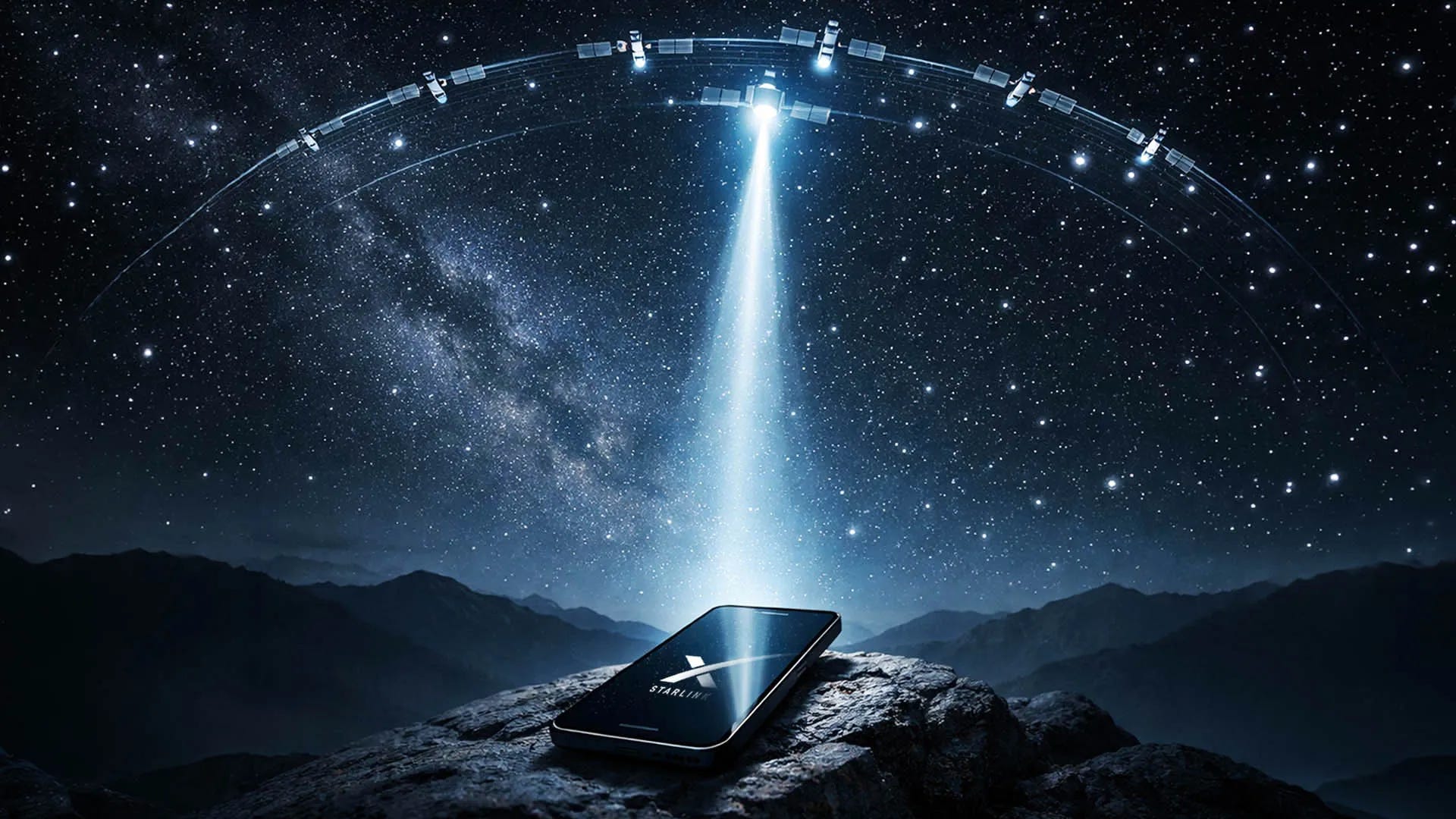
Cell Towers in the Sky
At Mobile World Congress last week, SpaceX rebranded its satellite-to-phone service as Starlink Mobile.
The pitch: beam 5G-speed internet directly to the ordinary phone in your pocket. No dish. No dongle. No special hardware. Just a constellation of massive satellites, each with solar arrays spanning roughly 100 feet, launched 50 at a time aboard Starship — the largest rocket ever built.
Starlink’s current system already works. About 650 direct-to-cell satellites are in orbit today, serving 10 million monthly users. A few weeks ago, a SpaceX executive walked through a dead zone in the Sierra Nevada foothills, miles from the nearest cell tower, and made a live video call to a colleague in Seattle. On a normal phone. Connected to nothing but sky.
Five years ago that would have been science fiction. Today, it’s just their opening act.
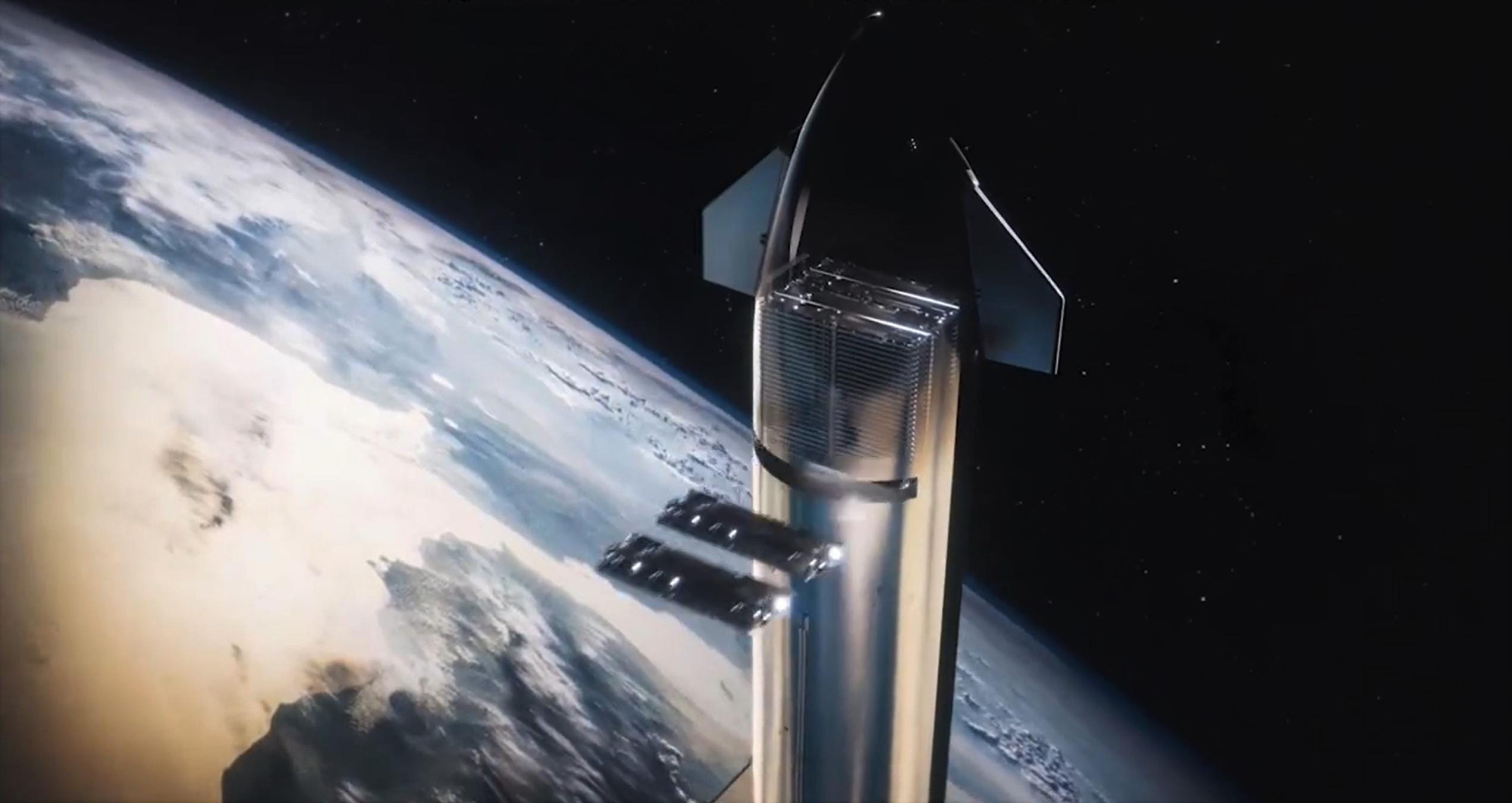
Big Satellites on a Bigger Rocket
The next generation of satellites, called V2, takes another bold leap. These carry phased-array antennas five times larger than the current fleet, delivering 20 times the link performance and 100 times the data density. A single user could see download speeds up to 150 Mbps. From space. On their existing phone. Think about streaming video from the top of a mountain.
And the only rocket in the world large enough to carry them is Starship. The V2 satellites are too big for a Falcon 9 fairing. They need the cargo bay of the largest launch vehicle ever flown. SpaceX plans to pack roughly 50 satellites into each launch beginning mid-2027, deploying about 1,200 within six months to blanket the Earth in continuous coverage.
This is the kind of plan that sounds impossible until you remember this is the same company that taught rockets to land themselves on drone ships at sea.
Literally Owning the Vibe
SpaceX also bought the airwaves.
Last September, they acquired $17 billion in wireless spectrum from EchoStar, frequencies already supported by Qualcomm's newest modems. They now own the rockets, the satellites, the spectrum, and the silicon partnerships.
The only piece they don't own is the phone in your hand.
With that much of the stack under one roof, SpaceX could launch its own global cellular service. For now, they're choosing to partner: T-Mobile in the U.S., Deutsche Telekom across 10 European countries, Rogers in Canada, and KDDI in Japan.
SpaceX is the invisible infrastructure layer underneath all of them, the global safety net that activates the moment terrestrial coverage falls away. Carriers are racing to sign up because Starlink makes their coverage maps look perfect without building a single new tower. How long that arrangement holds is one of the more interesting questions in telecom.

The Real Meaning of Connection
The stakes go far beyond coverage maps. In Ukraine, where Russian missile strikes routinely destroy cell towers and power grids, Starlink launched its direct-to-cell service through Kyivstar in late 2025. Twenty-two million subscribers now have a fallback that works during blackouts. When a tower goes down, the sky picks up.
We have never had a technology that could credibly promise connectivity that could technically cover every square meter of Earth’s surface. Starlink Mobile is that technology. It took reusable mega-rockets and $17 billion in spectrum and hundred-foot satellites to build it.
All so the phone already in your pocket could do something it’s never done before: work everywhere.
Thanks for joining us for our latest issue. Now go listen to our podcast :)
Exponential great read